
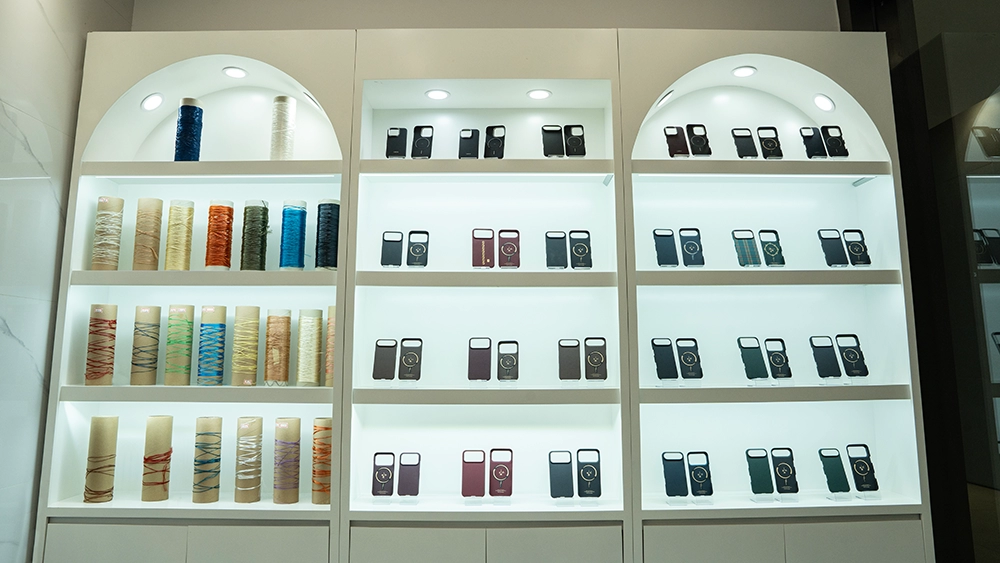
Most phone cases are replaced long before they have actually failed — usually because a scuff looks like damage, or because the owner cannot tell normal wear from a real problem. This guide explains the difference, which warning signs genuinely matter for protection, and how to inspect an aramid fiber case so you replace it for the right reason and at the right time.
Normal Wear vs. Actual Damage
Every case that lives in a pocket accumulates marks. The question is whether a mark affects appearance or protection. Those are very different things, and only the second one requires action.
| What you see | What it usually is | Action |
|---|---|---|
| Polished or glossy patches | Friction wear on the finish from repeated handling | Cosmetic only — no action |
| Faint surface scuffs | Contact with keys, coins or pocket seams | Cosmetic only |
| Slight colour deepening in high-touch areas | Hand oils settling into the weave | Clean it — often lifts entirely |
| A soft or spongy feel at the corners | Edge delamination or impact history | Inspect closely, consider replacing |
| Visible separation between layers | Laminate failure | Replace |
| A crack running through the frame | Structural failure | Replace immediately |
| The case flexes noticeably more than when new | Loss of fit and grip | Replace |
The rule of thumb: if it is on the surface, it is cosmetic. If it changes how the case feels, fits, or holds the phone, it matters.
The Five-Point Inspection
Run this every few months. It takes about a minute and tells you more than a visual glance ever will.
1. Fit and grip
Remove the case and refit it. A healthy case snaps on with a defined click and holds the phone without any movement. If the phone shifts inside the case, or the case slides off with light pressure, the material has relaxed and the retention is gone — even if the case looks perfect from the outside.
2. Corner integrity
Corners take almost every real drop. Press each one gently and look for:
- Softness where the case used to feel firm
- Any separation between the outer weave and the inner lining
- Fine white stress lines radiating from the corner
Corners are also where aramid fiber composites most often show their first real damage after a hard impact, because that is where the energy concentrates.
3. Camera and port cutouts
Check that the raised lip around the camera is still level and intact, and that the cutouts have not distorted. A deformed camera lip means the lens can contact a flat surface — which is exactly the failure the raised bezel exists to prevent.
4. Interior lining
Look at the inside of the case with good light. The lining should be smooth and intact. Once it has worn through, grit trapped between the case and the phone starts abrading the phone's own frame, and no amount of exterior cleaning will prevent that.
5. Impact history
Think back, not just look. If the phone has taken a serious drop, inspect the case the same day. Aramid fiber distributes impact energy well, and that distribution is exactly what can cause invisible internal delamination — the case may look fine while its ability to absorb the next impact has already been reduced.
When Replacement Is the Right Call
Replace the case if any of these are true:
- The fit has loosened and the phone moves inside the case
- The camera lip is deformed or worn away
- Layers have separated anywhere, especially at the corners
- The interior lining has worn through
- The case has absorbed a significant impact, even if it looks intact
- A crack or structural crease has appeared
Replace it before the phone is damaged, not after. A case is inexpensive relative to a screen or a rear glass repair, and a case that has already absorbed one major impact is working with a reduced margin.
When Replacement Is Not Necessary
These are commonly mistaken for reasons to buy a new case, but they usually are not:
- Shiny patches in high-touch areas — cosmetic polish from friction
- Light scuffing on the weave — expected from any daily-carry case
- Darkening in the texture — almost always hand oil sitting in the weave, and it normally cleans out
- A single small mark after months of use — that is a case doing its job, not failing at it
A good test: clean the case properly, let it dry, then look again. If the mark was dirt or oil, it will be gone. If it survives a proper clean, it is a change to the material — and even then, it only matters if it affects the five points above.
How to Make a Case Last Longer
The most effective longevity habits are about what you stop doing, not what you add:
- Do not carry keys or coins in the same pocket. This is the single largest source of surface wear.
- Clean the interior, not just the exterior. Interior grit is what wears the phone frame and stresses the lining.
- Dry the case fully after any cleaning before refitting it.
- Remove the case occasionally to inspect both the case and the phone. Marks you catch early are easy to deal with.
- Avoid solvent-based cleaners, which accelerate finish breakdown.
For the cleaning method itself, the general maintenance guidance for aramid fiber cases covers the six-step routine in detail — including why a dry brush before any liquid matters so much.
Frequently Asked Questions
How long should a phone case last?
A well-made aramid fiber case is typically built for the life of the device rather than a single year, provided it is not exposed to repeated severe impacts. Performance is better measured by the five-point inspection than by a fixed interval.
Does a scratched case still protect my phone?
Surface scratches do not reduce protection. Scratches are cosmetic, and the structural material underneath is unaffected. It is changes in fit, thickness, and layer integrity that reduce protection.
Should I replace a case after one drop?
Inspect it rather than replacing it automatically. Replace it if you find corner softness, layer separation, or a loosened fit. If the fit is still firm and the corners feel consistent, the case is very likely still doing its job.
My case looks shiny and worn — is that damage?
Usually not. Shiny patches are where friction has polished the surface finish, most often where your fingers rest or where the case rubs against a pocket. It is cosmetic wear that appears on every case used daily.
Can I tell if my case has internal damage?
Look for softness at the corners, a fit that has changed, and any layer separation at the edges. Internal delamination often shows up as a subtle change in how firm the case feels rather than as anything visible on the surface.
Conclusion
Judge a phone case by how it performs, not how it photographs. Surface shine and light scuffs are the normal cost of daily carry, while soft corners, a loose fit, and layer separation are the signs that protection has actually declined.
An aramid fiber case that passes the five-point inspection is still doing its job, however worn it looks. When you are ready for a replacement, or if you are sourcing cases in volume and want to specify the finish and coating that suit your market, explore the UICN range or send us your requirement. Our team works with brands on OEM and ODM programmes from design brief through production.